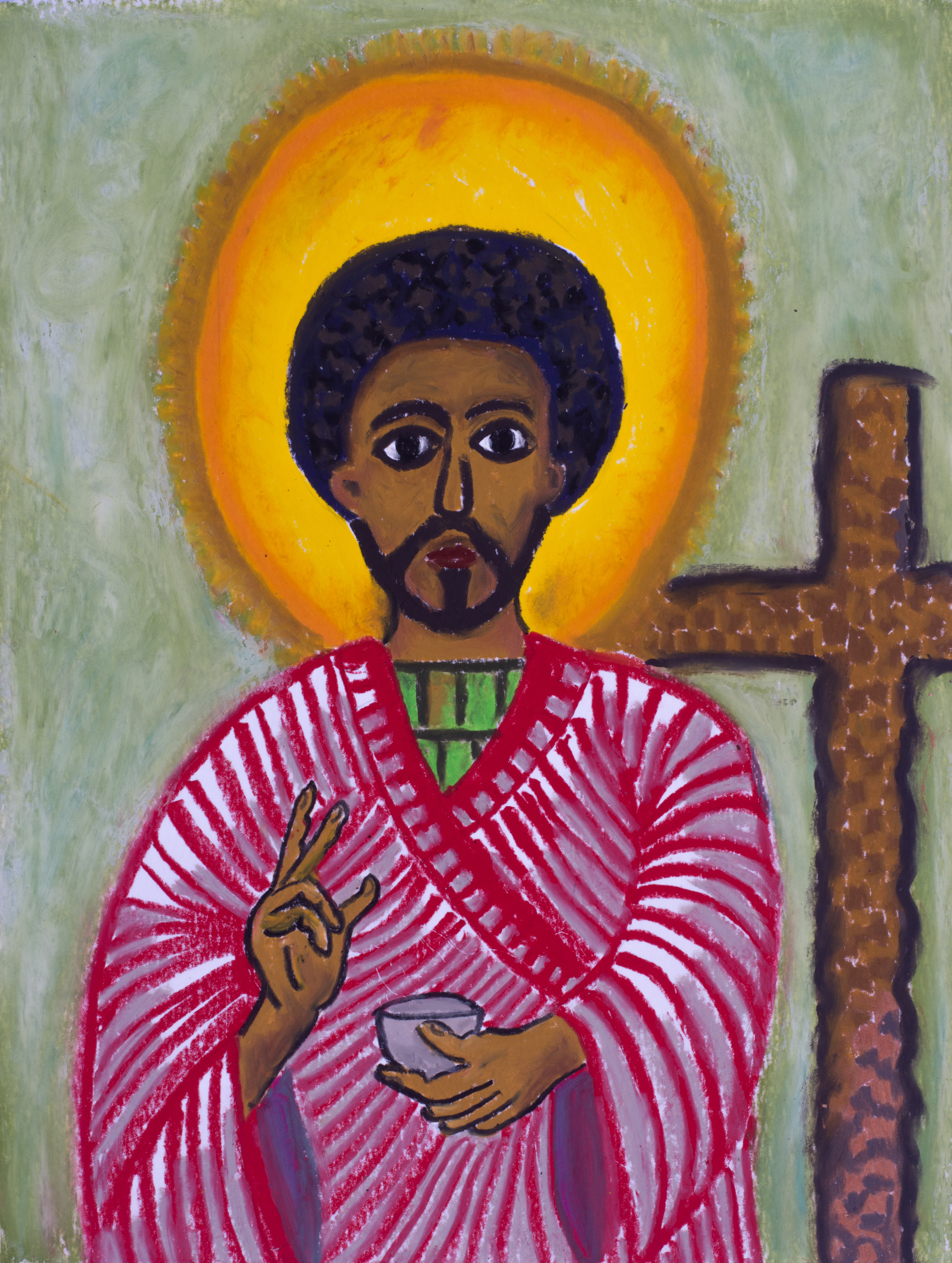
Deacons should be key actors in the liturgy
With the decline over a long period of a signficant permanent diaconate in the Anglican Church, the prominence in the early centuries of the deacon in the liturgical celebrations of the Church was forgotten. At best it was remembered that the Deacon should read the Gospel and say the Dismissal and that the Exultet in the Easter liturgy (An Anglican Prayer Book 1989, pp. 204-207) was meant to be sung by a deacon. We believe this amnesia needs to be remedied and the deacon restored to the rightful place next to the person presiding over the Eucharist.
The basics of what the deacon does in the Eucharist?
Regardless of the particular style of worship and customs of a particular parish (and these vary tremendously in the Anglican Church) there are certain things that the deacon should do in the Eucharist and deacons have a right to request that they do them. A common list of things the deacon does are:
- Reading the Gospel
- Announcing the Prayers
- Preparing the altar for the Eucharist
- Doing the Offertory
- Saying the acclamation
- Holding up the chalice at the end of the Eucharistic prayer
- Starting the Lord's Prayer
- Helping distribute Holy Communion
- Cleaning the vessels after the Eucharist
- Saying the Dismissal
See the document The role of the deacon in a typical Sunday Eucharist which shows how this could be done in a service which has a fair degree of ritual - but it is in no way a normative document. A more comprehensive resource is Ormond Platter's book Deacons in the Liturgy (the second edition of 2009). In 2023 the International Anglican Liturgical Commission published a report on Liturgical Formation of all the baptised which includes a useful section on deacons (pages 5 to 7) and asks (page 5):
"To what extent is or might the deacon be the minister primarily responsible in the local setting for the correct celebration of the Eucharist, for organising all the practical aspects of worship? Should the deacon be the minister with primary responsibility for organising and training those who will do the liturgical reading of Scripture; and the minister who will oversee the ‘prayer of the faithful’, the cleric responsible for training the laity who participate in this liturgical ministry? Does the deacon, as part of a team, have the potential to be a specialist, compared with the priest who is normally a general practitioner?
More details on what the deacon can do liturgically are given below.
The liturgical role of the deacon
When the Bishop ordains a deacon, the Bishop charges the candidate to “assist the Bishop and priests in public worship and in the administration of God’s word and sacraments” [An Anglican Prayer Book, page 583]. This charge means that the liturgical ministry of a deacon is a ministry of service, as are all the other aspects of diaconal ministry. The liturgical role of the deacon is important and worthy of respect, especially in the Sunday Eucharist, the principal occasion where the deacon is known to the whole Church. The deacon is a mediator between the bishop (or in his place, the presbyter (the priest)) and the whole congregation. The bishop is the presider at the Eucharist. Of all the others ministering in the sanctuary (deacon, lay ministers, altar servers, etc.) the deacon holds first place.
The deacon is an assistant to the president (the bishop or priest) and is subject to the leadership of the presider. However, the deacon’s primary ministry in the service is to the gathered congregation, the assembly, not the presider. The deacon guides the singing, says prayers, delivers instructions, etc. During the celebration, the deacon sees that everything moves in an orderly and dignified way. The deacon gives whatever directions are required.
All lesser ministries in the sanctuary come from the deacon’s ministry and they are subordinate to it and they assist it. The deacon has to coordinate of all the lesser ministries of lay-ministers, servers, readers. The deacon, therefore, should be reasonably competent in all these ministries. He or she should be able to carry them out at least as well as anyone else. Therefore the deacon should be expected to have developed skills in proclaiming the Scriptures, leading the singing, and coordinating the details is the liturgy.
For example, before the service, the deacon should make sure all needed ministers are present and accounted for. He also should confirm that the sacred vessels are prepared, with sufficient hosts, as well as the altar. Finally, the deacon should check the microphone, data projector, lighting, etc. and should be ready to make any adaptations needed for the situation.
The deacon in the Eucharist
- If the Gospel book is carried in the procession, though it may be carried by a server, ideally it should be carried by the deacon.
- The deacon may lead the saying of the Ten Commandments during Lent (page 140).
- The deacon (as may a lay minister) may lead sections 4-13 and 17-20 (the readings).
- The deacon may carry the Gospel in the Gospel procession and should receive a blessing from the presider on the way to reading the Gospel.
- Reading the Gospel in the Eucharist is the right of the deacon
- If licensed to do so, the deacon may preach. Deacons should focus their homilies upon the essential character of their ministry: servanthood to the Church, to those in need, particularly to the sick, the poor, and the neglected, and presentation of the needs and hopes of the world to the church.
- The deacon should have a principal role in the Prayers (sections 27-42), though these may often be led by lay ministers. The deacon may be asked to provide to the intercessor those names and concerns for which prayers are asked. The deacon may also compose and lead these intercessions.
- The deacon, with the assistance of the servers, prepares the altar for the Eucharist.
- Doing the Offertory, the deacon is responsible for offering the collection, the bread and the wine (sections 48-50).
- During the Eucharistic prayer the deacon leads the saying of the Acclamation (section 57 or 65 or 72 or 75).
- If it is the custom in the parish to elevate the consecrated sacrament at the doxology to the eucharistic prayer (the last sentence of the Eucharistic prayer), the deacon, as minister of the chalice, elevates the chalice and the celebrant elevates the consecrated bread.
- The deacon commonly leads the saying of the Lord's Prayer (section 77).
- The deacon helps distribute the holy communion. The normal minister of the consecrated bread is a bishop or a priest. If there are insufficient bishops or priests present, then deacons may administer the consecrated bread. The normal minister of the chalice is a deacon. If there are insufficient deacons, then priests or licensed lay persons administer the chalice.
- Cleaning the vessels after the Eucharist is done or cooordinated by the deacon.
- The dismissal (Section 90) should always be done by the deacon.
Taking a reserved sacrament service
On very rare occasions and only in parishes where the reserved sacrament is kept, holy communion may be provided to meet the emergency need of a congregation where the priest is unavailable. Essentially, the Eucharistic service is followed with the following changes:
- The absolution (section 14)- you and your are changed to us and our.
- The collection offertory may be said but not section 50 (for the bread and wine)
- The Eucharistic prayer is omitted (sections 51-76)
- The final blessing (section 89) is omitted.
Ash Wednesday
The deacon is to read the gospel as he or she would do at any celebration of the Eucharist. A deacon may assist with the imposition of ashes and the recitation of Psalm 51 which is meant to accompany the imposition of ashes. In the absence of a bishop or priest, the whole Ash Wednesday liturgy may be led by a deacon.
Palm Sunday
The deacon reads the triumphal entry gospel (page 173, section 17). At the Eucharist which follows, the Gospel is the Passion of the Lord. It can be read by the deacon or other persons. However, the deacon might organize such a dramatic reading or chanting of the gospel, and certainly might participate in it. It is particularly suitable for the deacon to be the narrator. In the absence of a bishop or priest, the whole Palm Sunday liturgy (pages 172-173) may be lead by the deacon.
Maundy Thursday
The deacon should assist with the foot washing. The deacon prepares the altar for communion from the Reserved Sacrament and assists in administering Holy Communion. In the absence of a bishop or priest this service may not be celebrated.
Good Friday
The deacon prostrates him or herself alongside the priest at the beginning of the service (page 188, section 47). The deacon can also lead the general intercessions (section 54). The deacon carries the veiled cross according to one of the the three options given in section 55. In the absence of a bishop or priest a deacon may lead this liturgy (pages 188-197 plus section 66 on page 199).
The Easter vigil
The deacon always carries the Easter candle in the opening procession (page 204, section 75) and sings the Exultet (section 76). The dismissal has alleluias attached (page 90 section 90b). In the absence of a bishop or priest a deacon may lead this liturgy (pages 202-230, concluding with the Lord's Prayer and dismissal with alleluias).
Baptisms
The deacon is to read the gospel. The deacon might preach the sermon, providing that such a sermon always reflects some aspect of servant ministry. The deacon carries the paschal candle to and from the font. A deacon may fill the font, pour the water over the candidate in the name of the Father, the Son, and the Holy Spirit, and present to the newly baptized a candle lighted from the paschal candle. In the absence of a bishop or priest the deacon may perform the whole baptism service. In an emergency, a deacon, or a lay person, may baptize.
Marriage
Normally deacons cannot perform marriages without the bishop's specific approval and direction.
Confession
This is a ministry of the bishop and priests. In an extreme emergency a deacon might hear a confession and offer a short prayer of pardon.
Ministry to the sick and dying
The deacon may lead all these services on pages 492-522 with the appropriate changes to the wording of absolutions and blessings. The anointing of the sick usually requires permission from the Bishop. Although anointing of the sick is primarily reserved to priests, in times of necessity a deacon may anoint particularly in their servanthood ministries outside the church. Such anointing may be of particular concern to deacons who are hospital chaplains, hospice chaplains, nursing home chaplains, even prison chaplains.
Funerals and burials
The deacon may carry the paschal candle in the opening procession. A deacon reads the gospel and might lead the psalm when it cannot be sung. A deacon could preach the homily, but should remember that a eulogy praising the dead person is never appropriate. A deacon may lead the prayers of the people. If a Eucharist is to follow, a deacon should do the normal deacon’s functions in that liturgy. If the Paschal Candle is carried out of the church ahead of the coffin, the deacon usually performs that ministry.
A priest may authorise the deacon to take any of these services on pages 525-568.
A caution about the liturgical work of the deacon
The deacon’s liturgical duties should not take time away from the deacon’s servanthood ministries. It should not be on top of the list of the deacon's duties.
Deacons should not be expected to lead services at their assigned church on a regular basis, except as a matter of missionary strategy approved by the bishop. Similarly the priest-in-charge should not proposes that the deacon takes communion services from the reserved sacrament except when the priest is unavoidably absent from the parish and no other priest is available.
The issue of blessings
There is much confusion in the Anglican Church about whether deacons can offer official blessings. Many people ignorantly believe that only priests can bless. This is not correct, though what blessings deacons are allowed to give is obscure.
The situation in the Roman Catholic Church is somewhat clearer: a deacon can only give those blessings permitted by Church Law, whereas a priest can give any blessing (except those reserved to the Bishop). These blessings permitted to the deacon include the nuptial blessing in holy matrimony, the blessing of the water in baptism, blessings in the funeral rites, blessing religious items, crucifixes, rosaries, medals, and other articles used in religious devotions as well as holy water and the private homes of Christians (that is, to administer what the Roman Catholic Church calls sacramentals).
When non-communicants come to the communion rail for a blessing, the deacon can join the priest in these blessings.